Brows
Brows after over-plucking: how to get them back
Hairs that have been plucked for years sometimes grow back, and sometimes they don't. What to do when your eyebrows are sparse — from the smallest intervention to reconstruction.
Linda Borovková· 25/07/2026· 4 min read
The generation that grew up during the era of thin eyebrows is now facing the same problem: eyebrows that were plucked into a thin line for years haven't grown back. And no, it's not your fault, and you can't just 'wait it out'.
The good news is that there are more options than usually thought, and not all of them involve permanent make-up.
Why Eyebrows Don't Grow Back
An eyebrow hair, like any hair, has its growth cycle. When it's plucked, the follicle usually produces a new one. However, when it's repeatedly and consistently plucked from the same spot, the follicle gets damaged and stops producing hair altogether.
How many years this takes varies individually. That's why some people's eyebrows grew back after a few years and others didn't — and why the question 'how long will it take for them to grow back' can't be answered generally.
First, Leave Your Eyebrows Alone for Six Months
Before you decide on any intervention, try one thing: don't pluck your eyebrows at all for six months. Not even 'just the ones under the line'.
It sounds like the most boring advice in the world, but it's by far the most effective. Many clients find that after six months, more hair has grown back than they expected, and that it's enough to simply shape their eyebrows rather than needing to fill them in.
The period without plucking isn't pretty — your eyebrows will look untidy for a while. Tinting can help to even out the appearance by highlighting even the fine, light hairs you didn't know you had.
What Can Be Done When There Are Hairs
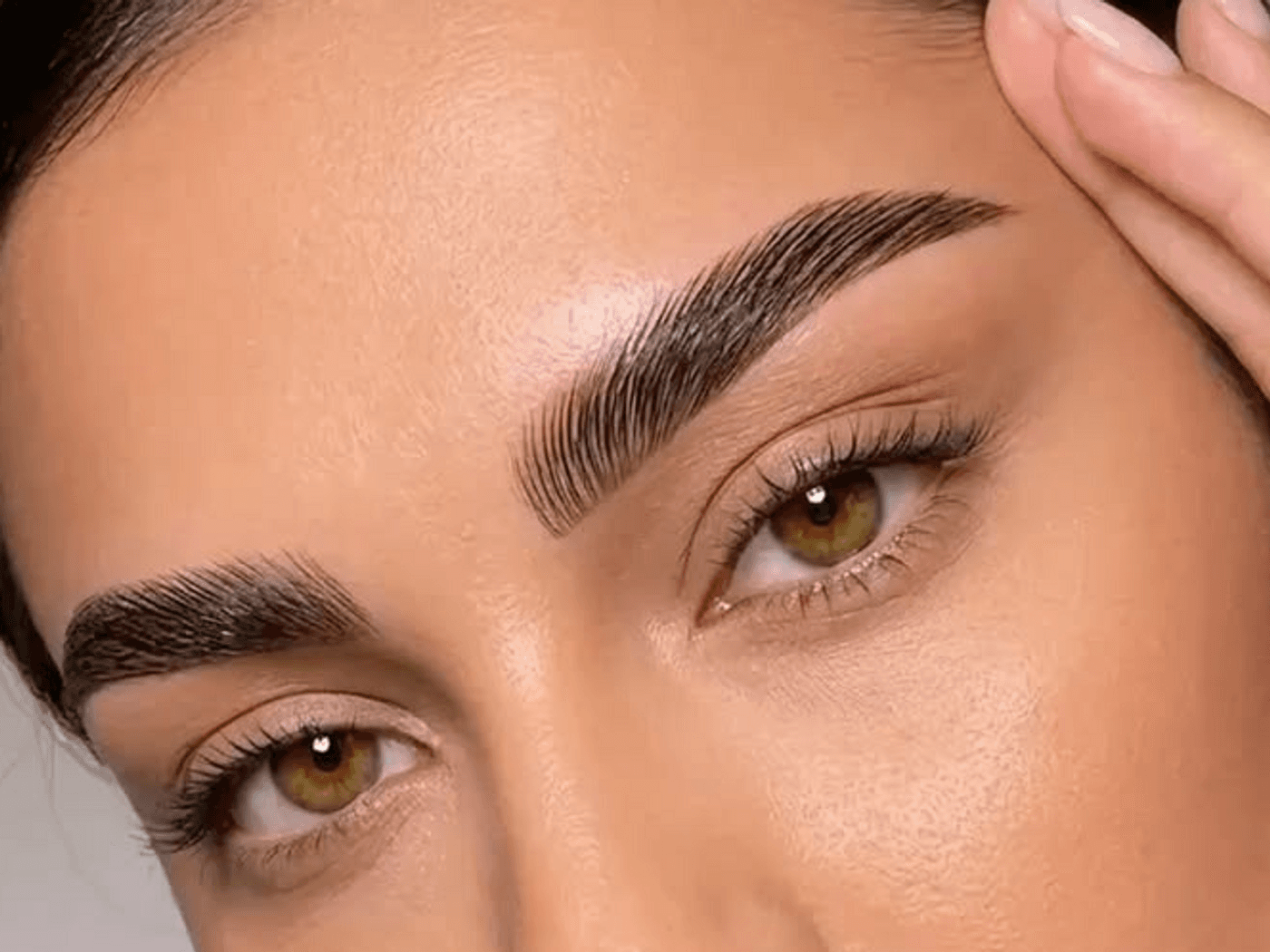
If there are hairs in your eyebrows, but they're growing incorrectly or are sparse, brow lamination offers the best balance of effect and intervention.
Brow lamination aligns the hairs in one direction and keeps them there for four to six weeks. It sounds like a minor cosmetic detail, but it works surprisingly well for sparse eyebrows: the aligned hairs cover gaps, and the eyebrows look fuller without anything being drawn on.
In combination with tinting, even fine hairs that previously didn't contribute to the overall look are enhanced.
What Can Be Done When There Are No Hairs
There are two paths here, and the difference between them is significant.
Hair Reconstruction (Hyper Realistic Brows, 6D Reconstruction)
Individual hairs made from real human hair are added to the eyebrows in the correct direction, length, and colour. The result is practically indistinguishable from natural eyebrows.
Pros: It's not a permanent intervention on the skin. It can even be done where there's a scar. The result is the most natural of the existing options.
Cons: It's not permanent — you return for check-ups and top-ups after a few weeks. The price depends on the extent of the work.
Permanent Make-up for Eyebrows
Pigment is applied to the upper layer of the skin. It lasts one to three years.
Pros: Longest lasting. Solves the problem even for eyebrows where there are no hairs at all. Eliminates daily drawing.
Cons: It's an intervention on the skin with a healing period and a touch-up after a month. The technique must be chosen according to skin type — on oilier skin, hair stroke techniques can blur, and a powder effect is more suitable.
How to Decide
- Hairs are present, but growing incorrectly → brow lamination and tinting.
- Hairs are sparse, but evenly distributed → brow lamination, possibly with individual hair reconstruction.
- One area is without hairs (typically the end of the eyebrow or after a scar) → hair reconstruction.
- Eyebrows are practically non-existent → permanent make-up, or 6D reconstruction depending on how permanent a solution you desire.
- Unsure → come for a consultation. We'll assess what's there and advise on what makes sense.
What Doesn't Work
Be sceptical of serums that promise new growth in areas where the follicle is damaged. Eyebrow serums can support existing hairs but cannot create a new hair where the follicle has stopped functioning.
Similarly, 'just letting them grow' doesn't work for eyebrows that have been plucked for twenty years. Trying six months of leaving them alone is worthwhile — but if nothing has changed after six months, further waiting won't yield results.
And Most Importantly: Don't Shape Them Yourself
The most common reason why eyebrows look bad isn't sparseness, but shape. Eyebrow symmetry is measured according to facial proportions and with the understanding that the face isn't symmetrical. Eyebrows done 'to the millimetre' using an online template look unnatural.
For eyebrows you're trying to rescue, the shape is doubly important — you have fewer hairs to work with.
We do this here