Permanent make-up
Permanent brow make-up healing, day by day
On day one the brows are dark and bold, around day five they flake, around day ten they look as if they have vanished, and after a month they are done. This is the normal course — and it is exactly this course that frightens most clients when they are not expecting it.
Linda Borovková· 16/09/2026· 5 min read
Permanent make-up is the only treatment in the salon where the client leaves with a result that is not final. What you see in the mirror on day one changes beyond recognition over four weeks — it darkens, flakes, almost disappears and then comes back. Anyone who does not know this course calls us around day ten to say “it didn't take”. It took. The skin is just healing.
Here is what happens, day by day, and what to do in each phase. The timings are a guide — every skin heals a little differently.
Day 0: straight after the treatment
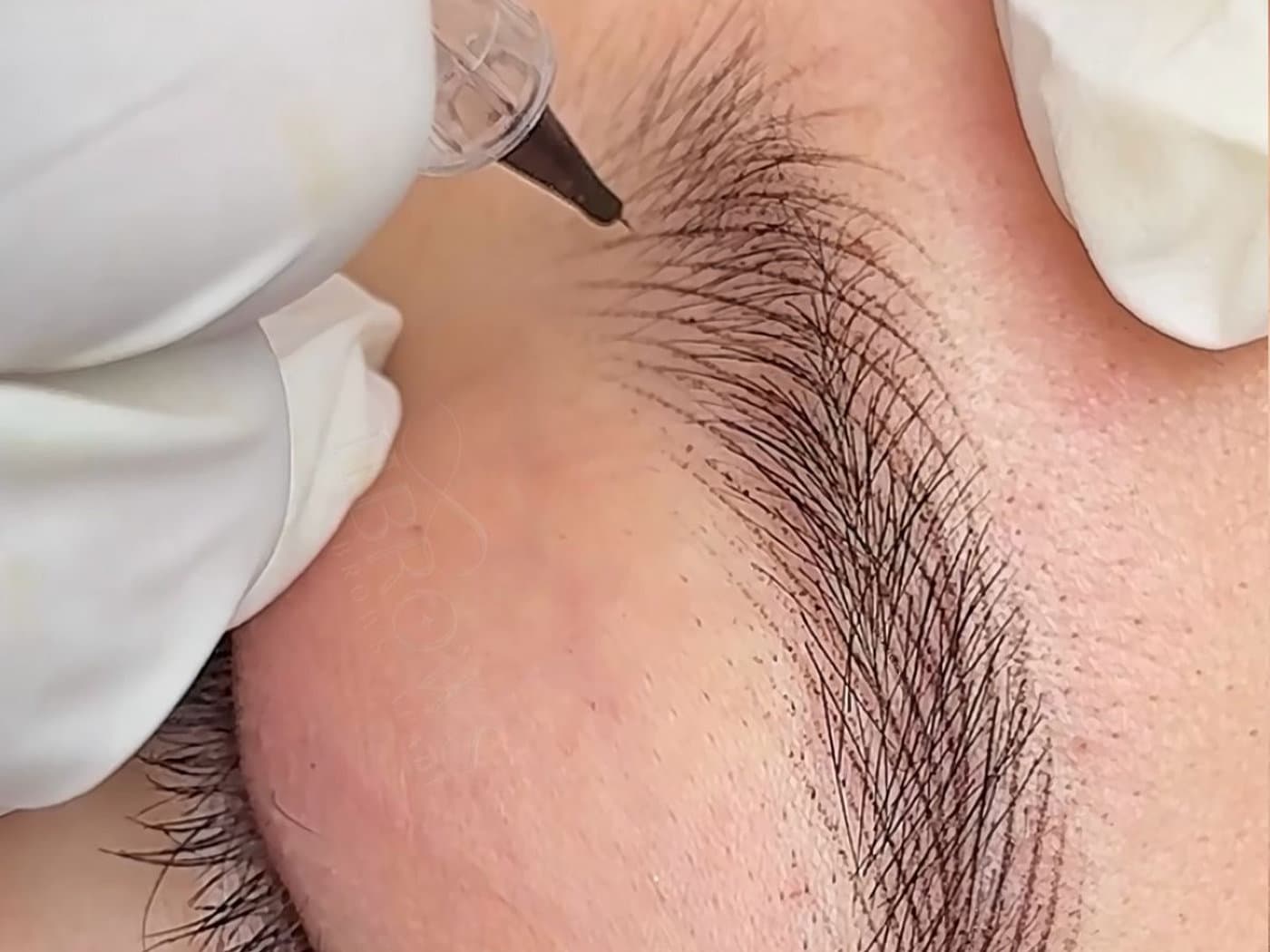
The brows are red, slightly swollen and noticeably darker than the final result — expect a third to a half darker. The pigment sits in freshly treated skin, and lymph on the surface darkens as it dries. The shape, though, is exactly the one you approved in pencil before pigmentation.
What to do: you get a healing balm and precise instructions on when and how to apply it. Follow those, not advice from the internet. Keep the brows dry for the first hours and do not touch them with your hands.
Days 1–3: dark and tight
The swelling goes down, the brows stay dark and the skin over them may feel tight and slightly tender. Clear fluid may appear on the surface — dab it off gently with a clean sterile pad; do not let a lot of it dry on, it would form a thicker crust.
What to do: a thin layer of balm as instructed, no make-up on or around the brows, no sweaty sport, sauna or pool. Washing your face is fine, but rinse the brows only lightly and pat dry rather than rub.
Days 4–7: flaking
The skin starts to flake gently and the brows itch. This is the most important phase of the whole healing and the one where most damage is done. The flakes carry some pigment — if you peel them off, you take the pigment with them and leave a light patch that then has to be evened out at the touch-up.
What to do: no scratching, no peeling, no rubbing. Let the flakes come away on their own. A thin layer of balm eases the itching. No exfoliants, no acids, no retinol around the brows.
Days 8–14: “it's gone”
Once the flaking is over the brows lighten — often so much that they look almost as they did before the treatment. That is because the new layer of skin that has formed over the pigment is still milky and opaque. The pigment is there; you just cannot see it.
This is the phase when clients call us. The answer is always the same: wait. Over the next two weeks the skin turns transparent and the colour returns.
What to do: from the second week you can wash the brows normally and lightly make up the area around them. Not on the brows themselves yet, until the skin is completely smooth.
Weeks 3–4: the colour returns and settles
The skin clears and the brows take on their final colour and depth. In some places the pigment will sit evenly, in others it will have taken more faintly — skin never accepts pigment identically across the whole area. That is not a fault; it is why the touch-up exists.
After four weeks you see what you wanted to see on day one. Take a photo; it makes it easier to agree what to even out at the touch-up.
Weeks 4–6: the touch-up
The touch-up is part of the treatment, not a repair. It fills in areas where the pigment sits faintly, fine-tunes the shade and any small detail of the shape you have noticed over the month. Without the touch-up, permanent make-up is only half finished. Healing after the touch-up is shorter and milder than the first time.
Do and don't — the full list
- Do: healing balm as instructed, clean hands, a clean pillowcase, leave the brows alone.
- Don't: scratch or peel, put make-up on the brows, use exfoliants or acids nearby, sauna, pool or sea, heavy sweating, sunbathing or sunbeds, alcohol for the first two days (it worsens swelling and bleeding).
- Not for the first 14 days: facials, brow lamination, brow tinting.
- Sun protection: once healed, use SPF on the brows. Sun is the main reason pigment fades faster.
Lips and eyeliner heal differently
The rules above apply to them too, with a few differences.
Lips swell more and the swelling lasts one to two days; drink through a straw and choose food that does not need chewing at the corners. They flake more visibly and the light phase lasts longer. If you are prone to cold sores, tell us before the treatment — pigmentation can trigger an outbreak, and it is worth discussing with your doctor in advance.
Eyeliner swells mildly, mainly the morning after. A few days without contact lenses, mascara or eye make-up removal. Flaking is fine and the colour settles faster than on brows.
When to call
Redness, mild swelling, itching and flaking are normal. Increasing pain, swelling that grows after day three instead of subsiding, pus, heat at the site or a fever are not. In that case call straight away — us and a doctor. It is rare, but speed matters.
And a year on?
Healed permanent make-up lasts one to three years depending on skin type and sun, then it is refreshed with a shorter treatment. It fades faster on oily skin and with frequent sunbathing. How long it lasts and what shortens it is covered in a separate article.
If you are only curious about permanent make-up so far, come for a consultation. We draw the shape in pencil, walk you through the whole process, and nothing is pigmented until you say yes.
We do this here