Brows
Brow lamination or permanent make-up? How to choose
Both treatments promise full, groomed brows without drawing them on every morning. But they work completely differently: lamination shapes the hairs you have, permanent make-up adds pigment where hairs are missing. A comparison of longevity, discomfort, care and cost — and when to choose which.
Linda Borovková· 16/09/2026· 4 min read
“Lamination or permanent make-up?” is a question we hear almost every week — usually from a client who is tired of drawing her brows on every morning. Both treatments solve that. But each solves a different problem, and if you choose by price rather than by your brows, the result will disappoint.
How each method works
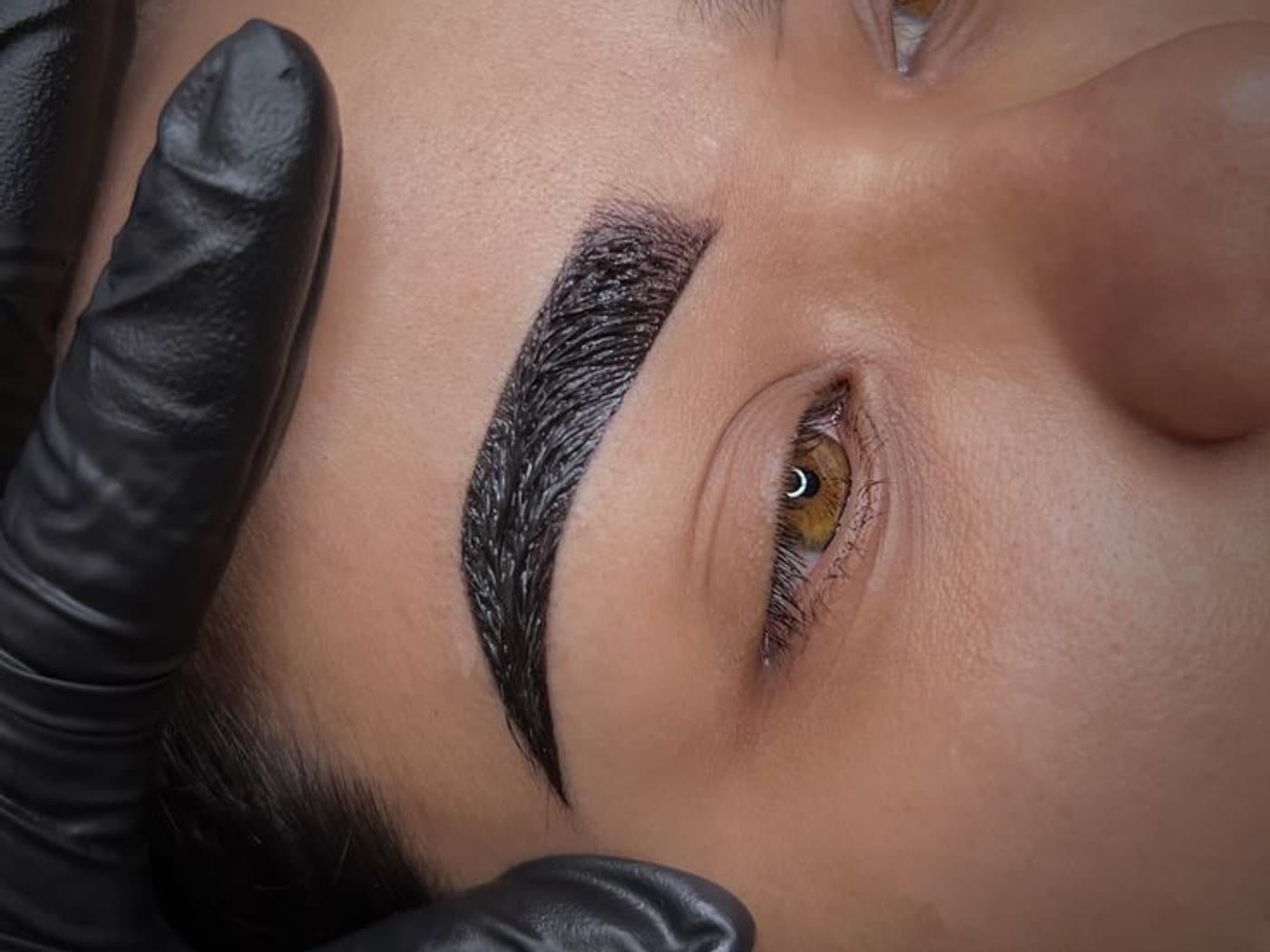
Brow lamination works with the hairs you have. A setting lotion softens the hair, it is brushed into the target direction and a fixing lotion keeps it there. Tinting and brow mapping are part of the treatment. Afterwards the brows look fuller, because the aligned hairs cover the gaps, and they hold their shape on their own — no gel.
Permanent brow make-up works with the skin. Pigment is implanted into its upper layer — either as individual hair strokes (nano brows) or as a soft powder shading. It creates shape and density even where there are no hairs, and lasts for years.
In one sentence: lamination changes direction, permanent make-up changes the colour and shape of the skin under the brow.
Six-point comparison
Longevity. Lamination four to six weeks, the tint three to four. Permanent make-up one to three years depending on skin type and sun, then a refresh.
Discomfort. Lamination is painless; you only feel the lotion on your skin. For permanent make-up a numbing cream is applied and the treatment is tolerable — clients mostly describe it as scratching. Without numbing it would be unpleasant.
Time in the salon. Lamination under an hour, once. Permanent make-up around two hours plus a touch-up after four to six weeks, which is part of the process.
Healing. None after lamination — keep the brows dry for 24 hours and you are done. After permanent make-up the skin heals for about two weeks: the brows are darker at first, then flake, then fade almost to nothing before the colour returns. We have a separate day-by-day article on it.
Cost. Lamination is much cheaper as a one-off but repeats every five to six weeks. Permanent make-up is a bigger investment once every one to three years. Per month the two converge; the difference is mainly how much you pay at once.
Reversibility. Lamination grows out in a few weeks and leaves nothing behind. Permanent make-up fades over years, and if the shape is wrong, fixing it is complicated. That is why the shape is drawn in pencil first and pigmented only after you approve it.
Who lamination is for
- You have hairs, but they grow sideways, curl or point down.
- The brows are sparse only in places and hairs are there — lamination covers the gaps.
- You want fuller brows but nothing permanent.
- You fix your brows with gel every morning and they give up by evening.
- You have strong brows that need taming, not filling.
Who permanent make-up is for
- There are areas of your brow with no hairs at all, or hairs never grew there.
- You have a scar in the brow.
- You draw your brows every day and want to stop for years.
- You want a shape that survives holidays, the pool and the sauna.
- You are prepared for two weeks of healing and a touch-up.
And when we do not do permanent make-up: during pregnancy and breastfeeding, during isotretinoin treatment, with clotting disorders, with an active inflammation at the treatment site. If any of that applies to you, lamination is a safe option in the meantime.
The third way: adding real hairs
Between the two methods there is a third that few people know about. Hyper realistic brows and 6D reconstruction fill in missing hairs with real human hair — following the direction of growth, in the colour and length of your own. It suits cases where hairs are missing but the client does not want pigment in the skin: after over-plucking, around a scar, after cancer treatment. It lasts weeks, not years, but the result is indistinguishable from your own brows.
Can they be combined?
Yes, and often are. Permanent make-up handles shape and density, lamination handles the direction of the hairs — once PMU has healed, the brows can be laminated and tinted like any other. It works the other way too: a client who has had lamination for years can move to permanent make-up when her hairs are no longer enough.
How to decide in three questions
- You have brow hairs, they just grow badly? Lamination.
- Hairs are missing altogether and you want it solved for years? Permanent make-up.
- Hairs are missing, but you want nothing permanent? Hyper realistic brows.
If you are not sure which group you belong to, come for a consultation. We will look at your brows in daylight, draw the shape and tell you what we would choose — even if it is the cheaper treatment.
We do this here
Our treatments on this topic
Want to learn it?