Permanent make-up
How long permanent make-up lasts and what shortens its longevity
Brows one to three years, eyeliner two to five, lips two to four. The range is wide and depends on factors usually not discussed before the treatment.
Linda Borovková· 25/07/2026· 4 min read
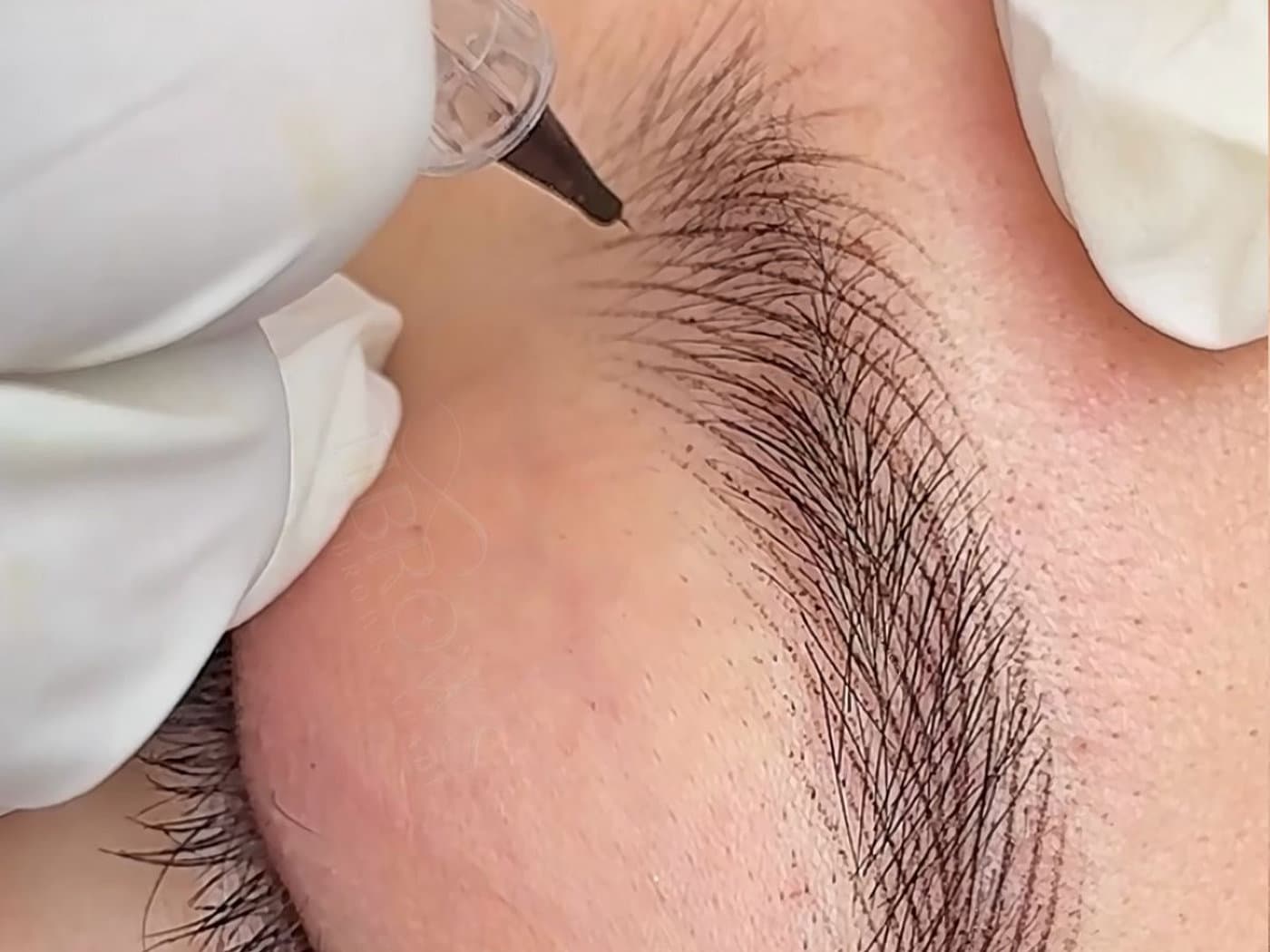
'Permanent' in the name is misleading. Permanent make-up is not truly permanent, and that's a good thing — if it were, you'd be stuck with a brow shape from 2026 even in 2050, when it might no longer suit your face.
The pigment is deposited more superficially than with a tattoo, and the body gradually breaks it down. So the question isn't if it will fade, but when.
How long it lasts
- Brows: usually one to three years.
- Eyeliner: two to five years. The eyelid is the most stable of the three areas mentioned.
- Lips: two to four years. Mucous membranes regenerate faster than skin.
The range within each category is wide because it depends on five factors that are discussed less often than the technique itself.
1. Skin type
On oily skin, the pigment lasts for a shorter time. Increased sebum production gradually pushes the pigment out, and with hair stroke techniques, individual strokes can blur, making the brows look powdered after about a year.
That's why a powder effect is often chosen for oilier skin instead of hair strokes. It's not an inferior technique — it's a technique that ages better on that particular skin type.
2. Sun exposure
Ultraviolet light breaks down pigment. Those who tan frequently or work outdoors will lose colour significantly faster. A high SPF on brows and lips is therefore the cheapest way to extend longevity — and also the one most often forgotten.
3. Peels and active cosmetics
Acids, retinol, and mechanical peels accelerate skin cell turnover, which is otherwise desirable. With permanent make-up, this means that pigment is lost along with the exfoliated cells.
You don't have to give up active cosmetics — just avoid applying them directly to your brows and lips.
4. Shade
Lighter and softer shades fade faster than darker ones, simply because there's less pigment in the skin. This is one reason why the most subtle and natural results require more frequent touch-ups. It's a compromise: naturalness in exchange for durability.
5. Metabolism and lifestyle
A faster metabolism breaks down pigment more quickly. Smoking and intense exercise also play a role, as these affect blood circulation and skin cell turnover. It's not something you should change for your brows — but it explains why two clients with the same treatment might have different results after two years.
Why a touch-up is done after a month
A touch-up after four to six weeks isn't a correction of a mistake, but an integral part of the process. The skin absorbs pigment unevenly and slightly differently for each client. In some areas, the pigment takes fully, while in others, a lighter spot remains. During the touch-up, these areas are evened out, and the shade is fine-tuned, as this is when we truly see how the colour has settled on your skin.
Therefore, a treatment without a touch-up will never be as good as one with it — and if someone doesn't include it, they're not saving you time, but compromising on quality.
What healing looks like
For the first few days, the result will be darker and more prominent than it will ultimately be. Then, a delicate scab will form and detach naturally. After it peels off, the least pleasant phase begins: the result will lighten considerably, sometimes almost to invisibility for brows. The colour will return over the following days.
From this, one rule emerges: don't judge the result for the first three weeks. And crucially — during the healing period, the treated area must not be picked. A prematurely detached scab will remove pigment unevenly, creating a light spot that can only be resolved during the touch-up.
What to do when the colour fades
A refresh. This is quicker than the initial application, and during it, you can also change the shade or slightly adjust the shape — which is precisely the advantage that a permanent tattoo doesn't offer.
If you've lost or gained a lot of weight since the original treatment, or changed your hair colour, a refresh is a good opportunity to adapt the result. Brows that suited you as a blonde might not suit you as a brunette.
When the treatment cannot be performed
Permanent make-up is not performed during pregnancy or breastfeeding, with decompensated diabetes, during isotretinoin treatment, with blood clotting disorders, with acute illness or inflammation at the treatment site, or when taking blood-thinning medication without a doctor's consent. For lips, it's also not performed during an active cold sore outbreak.
If any of these apply to you, please let us know in advance — not just when you arrive at the salon.
We do this here